


Registrations for our 2026 Autumn Half-Term Intensives are now open! Click here to learn more and register!
Sensory Integration & Dr Jean Ayres
Who Was Dr Jean Ayres?
Anna Jean Ayres was an occupational therapist and neuroscientist who changed how we understand children's development.
Working in the 1960s and 70s, she developed Sensory Integration theory; identifying how the brain's ability to receive, organise, and respond to sensory information underpins a child's capacity to learn, behave, and take part in everyday life.
Her work was groundbreaking then, and it remains the foundation of specialist Sensory Integration practice today; rigorously tested and updated over more than five decades of ongoing research.

What is Sensory Integration?
Sensory Integration is the neurological process by which the brain takes in information from the body and the environment, organises it, and produces a meaningful response.
For most of us, this happens automatically and without effort. But for some children and young people, the process is disrupted, making everyday tasks, environments, and sensations feel overwhelming, confusing, or physically uncomfortable in ways that are difficult to articulate and easy to misread.
It is important to understand that sensory integration differences are not a behavioural choice. They reflect how a child/ young person's nervous system is wired and, with the right support, the child/young person can learn to navigate their world with greater ease.

Ayres SI® vs 'Sensory Activities'
-
Sensory activities such as sensory rooms, weighted blankets and movement breaks, are tools designed to help a child/young person feel calm, regulated, or engaged. They can be used by parents, teachers, and support staff without specialist training.
-
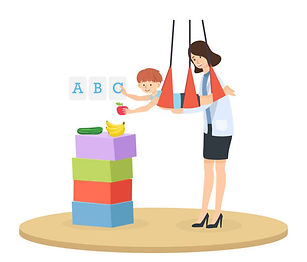
Ayres Sensory Integration® Therapy is a clinical intervention delivered by a certified Sensory Integration therapist in a specialist environment. It is based on formal assessment of how a child/young person's nervous system processes sensory information, and uses that assessment to guide a structured, individualised programme of treatment.
-
The goal is different. Sensory activities aim to support a child/young person in the moment. Ayres Sensory Integration® therapy aims to improve the underlying neurological processing addressing the root cause rather than managing the symptoms.
-
One does not replace the other. Many children and young people benefit from both. But where a child/young person has significant Sensory Integration dysfunction, clinical Ayres Sensory Integration® therapy can reach deeper: addressing the neurological roots of a child/young person's difficulties in a way that sensory activities are not designed to do.

Sensory Integration Therapy at Hopscotch
At Hopscotch, Sensory Integration therapy is delivered in a purpose-built environment by one of the UK's leading SI practitioners, giving every child and young person the conditions they need to make real progress:
-
Specialist sensory rooms equipped with a full range of suspended equipment, proprioceptive and vestibular tools, and tactile materials, designed specifically to support therapeutic Sensory Integration work.
-
Child-led sessions within a structured clinical framework. The child/young person's natural instincts and motivations guide the session, while the therapist shapes the environment and activities with clear clinical intention.
-
All Ayres Sensory Integration® assessments and therapy at Hopscotch are conducted by our team of specialists, ensuring the highest level of specialist expertise at every stage of a child/young person's Sensory Integration journey.