


Registrations for our 2026 Autumn Half-Term Intensives are now open! Click here to learn more and register!
Our Assessments
An assessment is the foundation of everything we do at Hopscotch. Before recommending any therapy, we want to understand your child/young person fully: how they process the world, where they are struggling, and why. Our assessments are thorough, evidence-based, and written for people, not filing cabinets.
Occupational Therapy Assessments
Our Occupational Therapy Assessments are divided into two categories:
-
Core Assessments:
-
Observation Session
-
Consultation Assessment
-
Full Sensory Processing Assessment
-
Specialist Assessments:
-
EHCP (Education, Health & Care Plan) Assessment
-
SIPT (The Sensory Integration & Praxis Tests)
-
EASI (The Evaluation in Ayres Sensory Integration)
-
Tribunal Assessment
In a standardised manner, all our occupational therapy assessments involve an evidence-based evaluation of:
-
Neurodevelopment
-
Sensory processing and modulation
-
Gross and fine motor skills
-
Writing skills
-
Motor planning and organisation
-
Play skills
-
Visual perception
Speech & Language Therapy Assessments
Our speech and language assessments provide families with a clear and comprehensive understanding of their child's communication profile, evaluating:
-
Speech sound development and phonological processing
-
Expressive language: vocabulary, sentence structure, and narrative ability
-
Receptive language: understanding of words, instructions, and concepts
-
Social communication and pragmatic language skills
-
Fluency and stammering
-
Voice quality and resonance
-
Pre-linguistic and early communication skills
-
Augmentative and Alternative Communication needs
-
Gestalt language processing and natural language acquisition

Core OT (Occupational Therapy) Assessments

Observation Session
Our Observation Session, which is our minimum requirement when a child or young person is introduced to our clinic, is an unstructured, child-led session in which the assessing therapist observes how your child explores, communicates, processes sensation, and interacts with their environment, while engaging in activities of their choice.
The therapist assesses the skills outlined above.
This session is particularly valuable where parents/carers and referrers want a gentle first step before committing to a full standardised assessment. It can also be used alongside formal assessments to add depth and nuance to the clinical picture.
Following the session, your therapist shares their observations with you and recommends whether further assessment or direct therapy would be beneficial. Your therapist also provides you with a treatment plan.

Consultation Assessment
Our Consultation Assessment is a focused, expert-led process designed to give you a thorough understanding of your child/young person's needs and a clear sense of what to do next.
First, your child/young person attends an in-clinic session with the therapist, who uses targeted clinical observation and selected assessments to explore the areas of greatest concern. The therapist assesses the skills outlined above.
After the session, your therapist shares their initial impressions with you directly following the session. They later provide you with a summary report, outlining their observations and recommendations.
This assessment is particularly valuable where parents/carers and referrers would like their child/young person to be assessed, but do not need a full, in-depth report following the assessment.
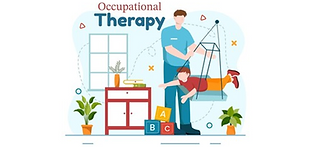
Full Sensory Processing Assessment
Our Full Assessment is an evidence-based process rooted in the Ayres Sensory Integration® framework. That gives you a comprehensive understanding of how your child/young person processes sensation, moves, thinks, and engages with the world around them.
Step 1: Parent/Carer Consultation (Online). An online session with one of our specialist therapists gives up the context we need: your child/young person's full story; their developmental history, your current concerns, and how difficulties are showing up at home, at school, and in daily life.
Step 2: Clinical Assessment. Your child/young person then attends a clinical in-depth session of 2.5-3 hours with the therapist. Using a combination of standardised assessments and clinical observation, we build a detailed picture of your child/young person's sensory processing, motor skills, and functional abilities.
Step 3: Report and Recommendations Following the session, your therapist will share their initial impressions with you directly. Within a few days, you will receive a comprehensive written report: clearly written, evidence-based, and rich with practical recommendations for home, school, and any onward support.
Specialist OT (Occupational Therapy) Assessments

OT - EHCP (Education, Health & Care Plan) Assessment
When a child or young person needs an Education, Health and Care Plan, or when an existing plan needs to reflect their occupational therapy needs accurately, Our EHCP assessment provides the rigorous, evidence-based report required.
This assessment follows a thorough three-step process, with a report specifically structured to meet EHCP standards.
Step 1: Parent/Carer Consultation (Online). We begin with a dedicated online session with you, giving us the space to hear your child/young person's full story: their developmental history, current challenges, and how difficulties are showing up at home, at school, and in daily life.
Step 2: Clinical Assessment. Your child/young person attends a clinical in-depth assessment of 2.5-3 hours with the therapist. Using a combination of standardised assessments and clinical observation, we build a detailed picture of your child/young person's sensory processing, motor skills, and functional abilities.
Step 3: Report and Recommendations. Within a few days of the clinic session, you will receive a comprehensive written report, formatted to meet EHCP requirements, clearly evidencing your child/young person's needs, the impact on their education, and specific, actionable recommendations for provision.
EASI (The Evaluation in Ayres Sensory Integration)
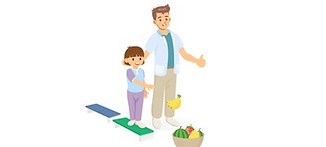
The EASI is a standardised, play-based assessment designed to give clinicians a detailed understanding of how a child's brain and body work together, and where that process may be breaking down.
Developed within the Ayres Sensory Integration® framework and administered by trained occupational therapists, the EASI is suitable for children aged 3 to 12 and evaluates four core areas: sensory perception, motor coordination, praxis (the ability to plan and execute unfamiliar movements), and sensory reactivity. Together, these give a rich and clinically grounded picture of how a child processes and responds to the sensory world around them.
Because it is play-based, the EASI is particularly well suited to younger children or those for whom more formal testing can be challenging, allowing the therapist to observe natural, meaningful responses rather than coached performance.
Findings from the EASI directly inform intervention planning, helping therapists develop targeted strategies that support a child's participation in learning, daily routines, and the activities that matter most to them.

SIPT (The Sensory Integration & Praxis Tests)
The SIPT is one of the most comprehensive standardised tools available for understanding how a child/young person's brain processes and responds to sensory information.
Comprising 17 individual tests, the SIPT evaluates a broad range of sensory integration processes that are fundamental to learning and behaviour: including tactile, visual, and auditory perception, as well as vestibular and proprioceptive functioning. Crucially, it also assesses praxis: the ability to plan, sequence, and execute unfamiliar movements, which underpins many of the challenges children and young people experience in school and daily life.
By identifying the underlying sensory processing factors affecting a child/young person's functioning, the SIPT provides a detailed and clinically robust foundation for intervention planning, guiding the development of targeted strategies that support more effective participation in everyday and school-based activities.
The SIPT is administered in clinic by our specialist therapists trained in its use.

OT - Tribunal Assessment
When a child or young person's Occupational Therapy needs are contested; whether at SEND Tribunal, in EHCP appeals, or in wider medico-legal proceedings, the strength of the underlying clinical evidence is paramount.
Our OT Tribunal Assessment mirrors the depth of our EHCP assessment but is specifically structured to meet the evidential standards of the First-tier Tribunal (SEND). All reports are written in accordance with UK tribunal regulations, setting out, in clear and defensible terms, the child or young person's sensory, neurodevelopmental, and functional needs; the impact of those needs on their education and daily life; and the specific provision required to meet them.
Our senior occupational therapists are available to appear as expert witnesses, presenting and defending clinical evidence in court with clarity and authority. Expert witness appointments can be booked as a half day or full day, depending on the demands of the case.
This service is available to families, solicitors, and representatives navigating SEND tribunals and related medico-legal proceedings.
SaLT (Speech & Language Therapy) Assessments
SaLT - EHCP (Education, Health & Care Plan) Assessment
When a child or young person's communication, language, or eating and drinking needs require formal recognition within an Education, Health and Care Plan, our EHCP SaLT assessment provides the clear, evidence-based report required.
This assessment follows a thorough three-step process, with a report specifically structured to meet EHCP standards.
Step 1: Parent/Carer Consultation (Online). We begin with a dedicated online session with you, giving us the space to hear your child/young person's full story: their communication history, current challenges, and how difficulties are showing up at home, at school, and in daily life.
Step 2: Clinical Assessment. Your child/young person attends a clinical in-depth session with one of our specialist Speech and Language Therapists. Using a combination of standardised assessments and clinical observation, we build a detailed picture of your child/young person's speech, language, communication, and where relevant, eating and drinking skills.
Step 3: Report and Recommendations Within a few days of the clinic session, you will receive a comprehensive written report formatted to meet EHCP requirements: clearly evidencing your child/young person's needs, the impact on their education, and specific, actionable recommendations for provision.
SaLT - Tribunal Assessment
When a child or young person's speech, language, communication, or eating and drinking needs are in dispute, robust clinical evidence is essential to a successful outcome.
Our SaLT Tribunal Assessment follows the same comprehensive process as our EHCP Speech & Language Therapy assessment, and is specifically structured to meet the evidential standards of the First-tier Tribunal (SEND). All reports are written in accordance with UK tribunal regulations, providing a clear, evidence-based account of the child or young person's needs, the impact on their education and participation, and the precise provision required to support them.
Where cases require it, our senior Speech and Language Therapists are available to appear as expert witnesses, presenting and defending clinical evidence in court. Expert witness appointments can be booked as a half day or full day.
This service is available to families, solicitors, and representatives navigating the SEND tribunal process and wider medico-legal work.
SaLT (Speech & Language Therapy) Assessment
Our speech and language assessment assessments are tailored to each child/young person's age, presentation, and referral reason. A typical assessment includes a detailed parent and caregiver interview, standardised testing using nationally recognised tools, structured and naturalistic observation of the child/young person's communication, and a review of any relevant school, medical, or EHCP documentation.
Standardised tools we use include:
-
CELF-5 (Clinical Evaluation of Language Fundamentals)
-
BESA (Battery for Assessment of Speech and Language)
-
PLS-5 (Preschool Language Scales)
-
GFTA-3 (Goldman-Fristoe Test of Articulation)
-
ERRNI (Expression, Reception and Recall of Narrative Instrument)
-
CASL-2 (Comprehensive Assessment of Spoken Language)
-
Derbyshire Language Scheme
-
Renfrew Action Picture Test