Registrations for our 2026 Autumn Half-Term Intensives are now open! Click here to learn more and register!
Social Communication
Social communication is about much more than talking. It is the ability to read a room, understand what is unsaid, navigate the unwritten rules of conversation, and connect with others in ways that feel natural and reciprocal. For children and young people who find this difficult, the challenges can be profound. This is not because they don't want to connect, but because the social world doesn't come with a manual.
Social communication difficulties can occur alongside Autism, ADHD, and language disorders, or as a standalone profile. Whatever the cause, specialist support can make a significant difference.
What Social Communication Difficulties Look Like
-
Difficulty understanding non-literal language: jokes, sarcasm, and metaphor can be confusing or easily misread.
-
Challenges with the unspoken rules of conversation: turn-taking, staying on topic, knowing when to speak and when to listen.
-
Misreading facial expressions, body language, and tone of voice, leading to misunderstandings in everyday interactions.
-
Saying socially unexpected things without intending to cause offence, and often being unaware of the impact.
-
Difficulty making and keeping friends despite genuinely wanting to: one of the most painful aspects for both children and their families.
.jpg)
Speech & Language Therapy Approaches
Our Speech & Language Therapists work with children and young people to build social communication skills in a way that is explicit, structured, and meaningful. This may include direct teaching of social communication rules and conventions, the use of social narratives and video modelling to make implicit rules visible, and role play to practise skills in a safe environment. For children and young people who benefit from peer-based learning, our Social Skills Groups provide a supported environment in which children and young people can practise social interaction alongside others who understand what it feels like.
The Role of Occupational Therapy
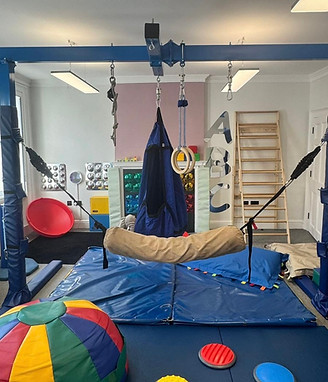
Social communication difficulties are rarely just about language. Sensory processing and self-regulation play a significant role. A child or young person who is dysregulated cannot effectively attend to, process, or respond to social cues. Our Occupational Therapists work alongside our Speech & Language Therapists to address the sensory and regulatory foundations of social participation, because when Occupational Therapy and Speech & Language Therapy work together, children and young people with complex profiles achieve better outcomes.